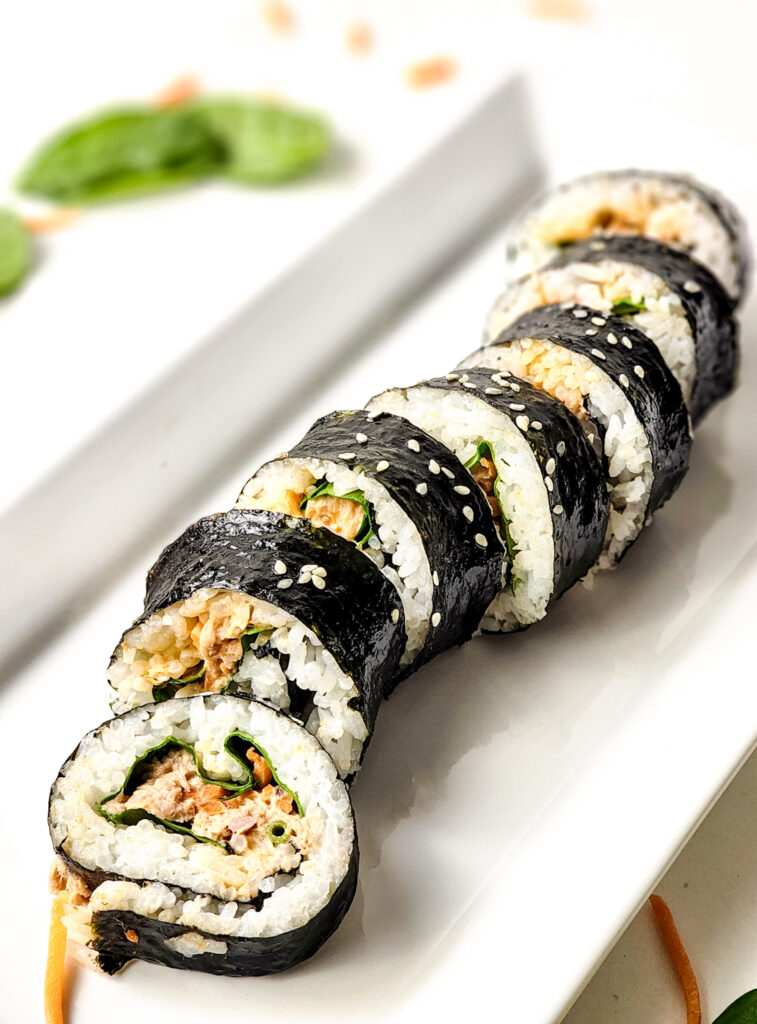
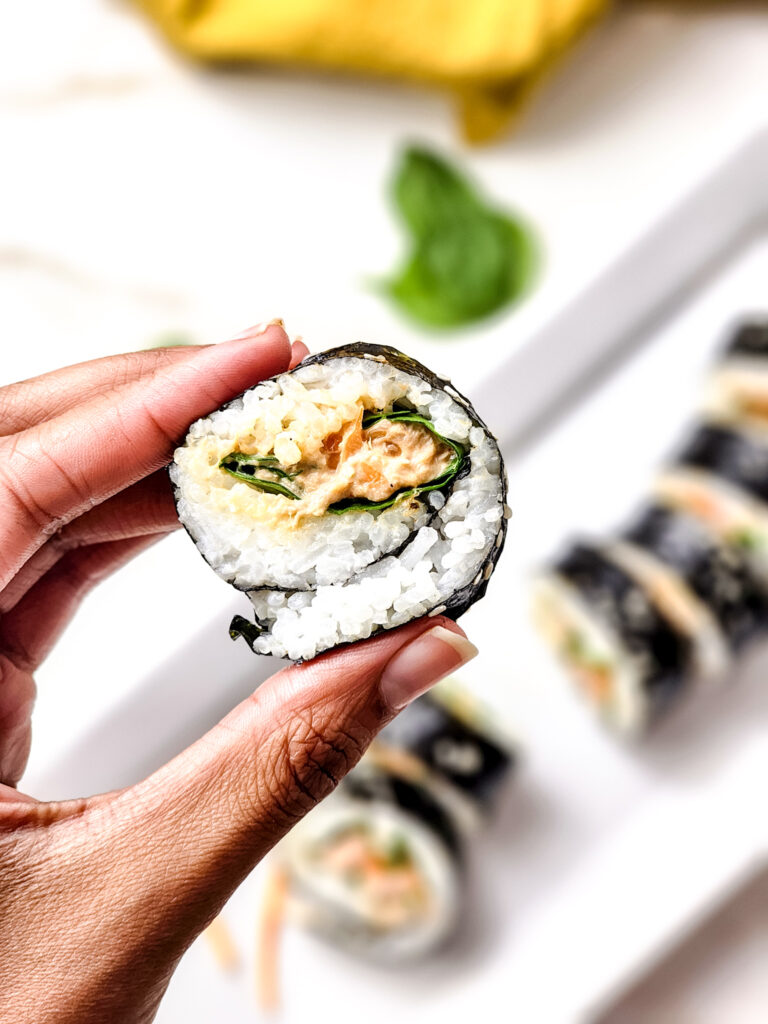
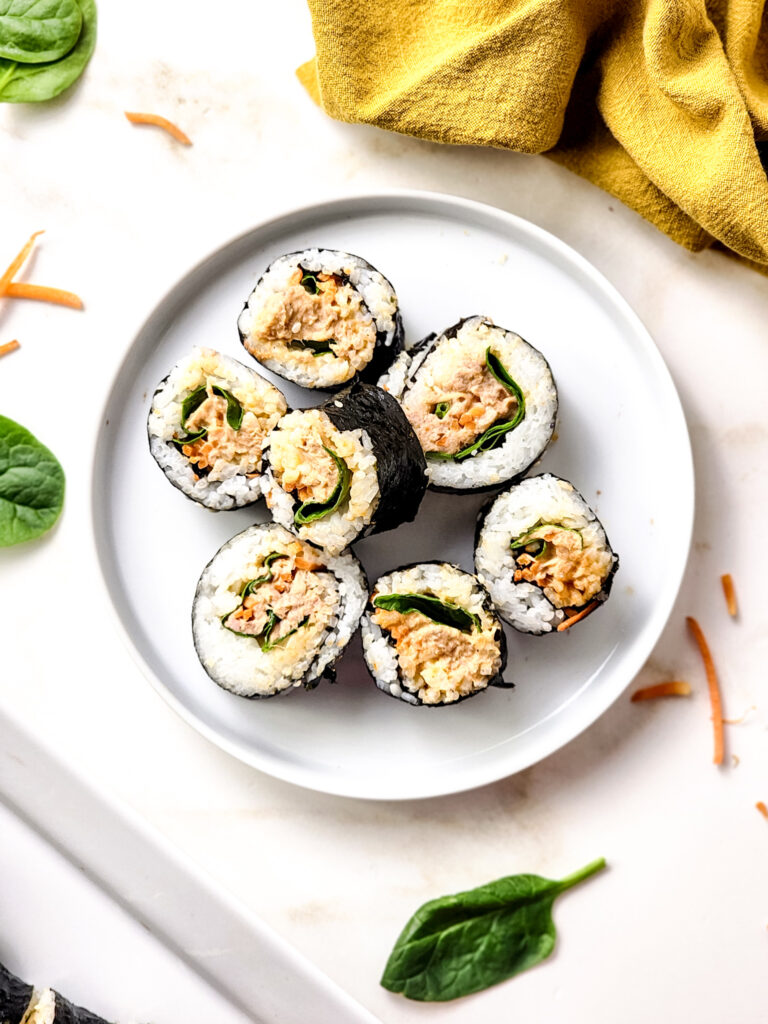
Spicy Tuna Kimbap is a quick, flavour-packed twist on a Korean classic, perfect for busy days when you want something fresh, satisfying, and easy to prepare. These bite-sized rolls combine seasoned rice, tender tuna mixed with creamy mayo and a kick of sriracha, along with crisp vegetables for added texture and colour.
Ideal for beginners, this recipe keeps things simple while still delivering bold flavour in every bite. Whether you’re making a light lunch, prepping snacks for the family, or adding something different to your weekly meal rotation, these kimbap rolls come together in minutes and look just as good as they taste.
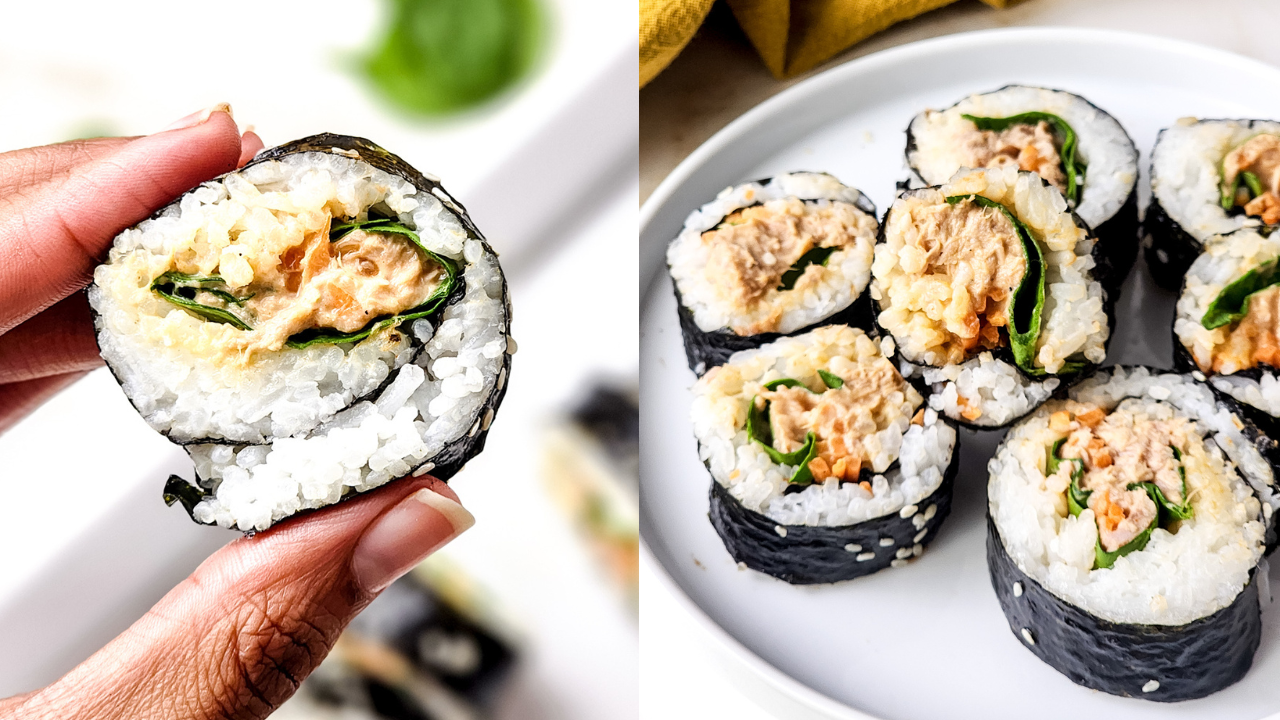
Yield: 20 kimbap rolls
Equipment:
Parchment Paper
Prep Time: 15 minutes
Ingredients:
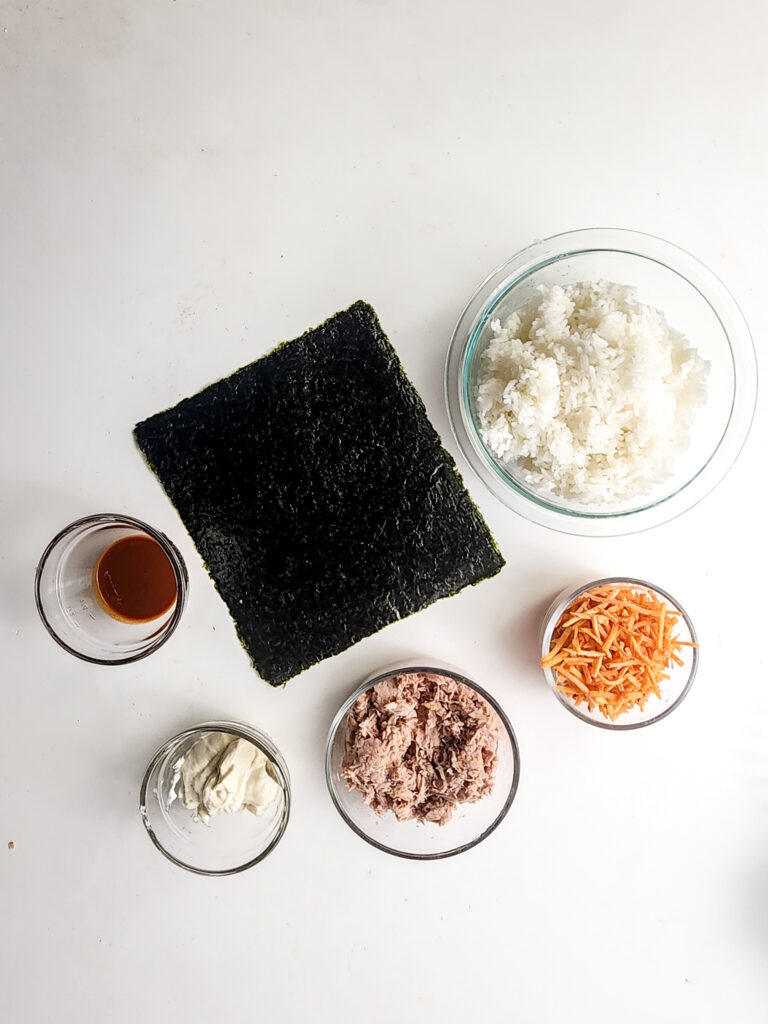
- 2-3 pieces of Seaweed paper
- 1 ½ cups cooked rice, cooled
- ¼ cup spinach
- ⅓ cup shredded carrots
- 2 cans cooked tuna, drained
- 3 tablespoons mayo
- 3 tablespoons sriracha sauce
- Salt to Taste
Topping
- Sesame Oil
- Sesame Seeds
Directions:
In a large bowl, combine the cooked rice with a pinch of salt and stir to season the rice evenly.
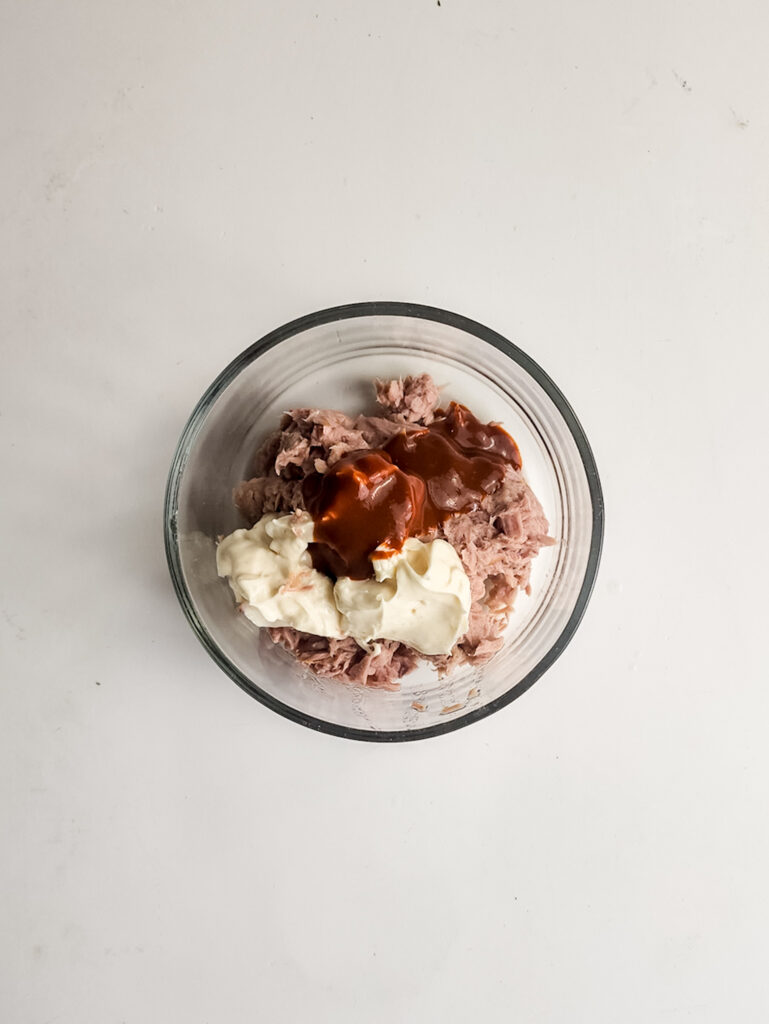
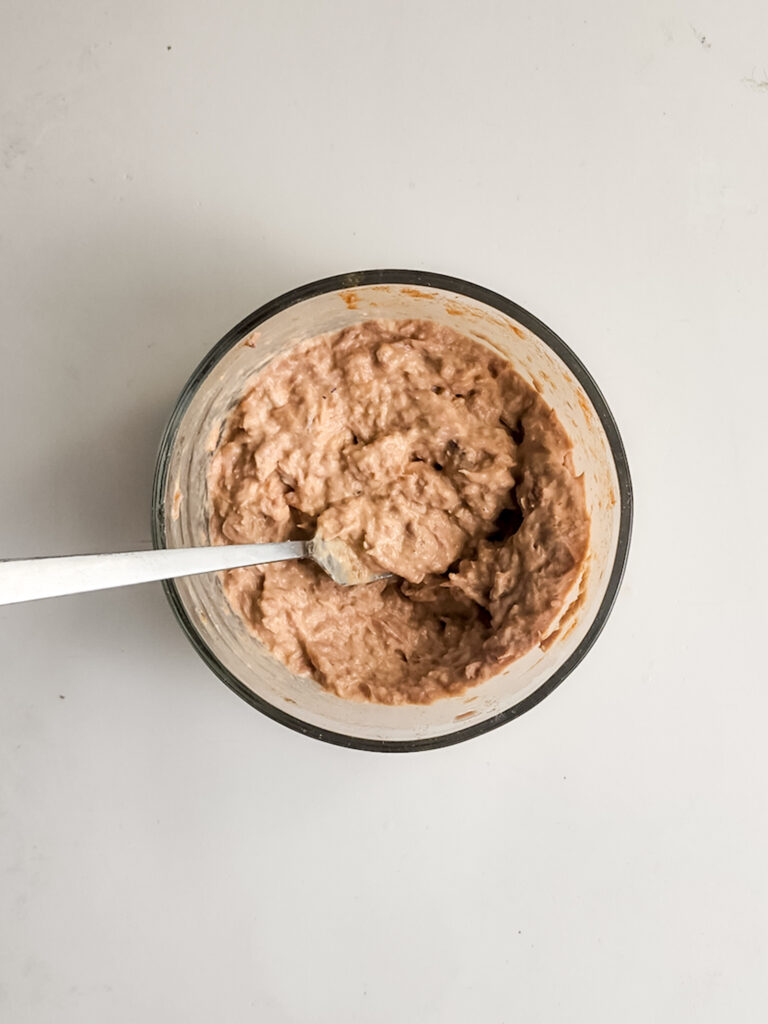
In a separate bowl, mix the drained tuna with mayo, sriracha sauce, and salt to taste. Stir until well combined.
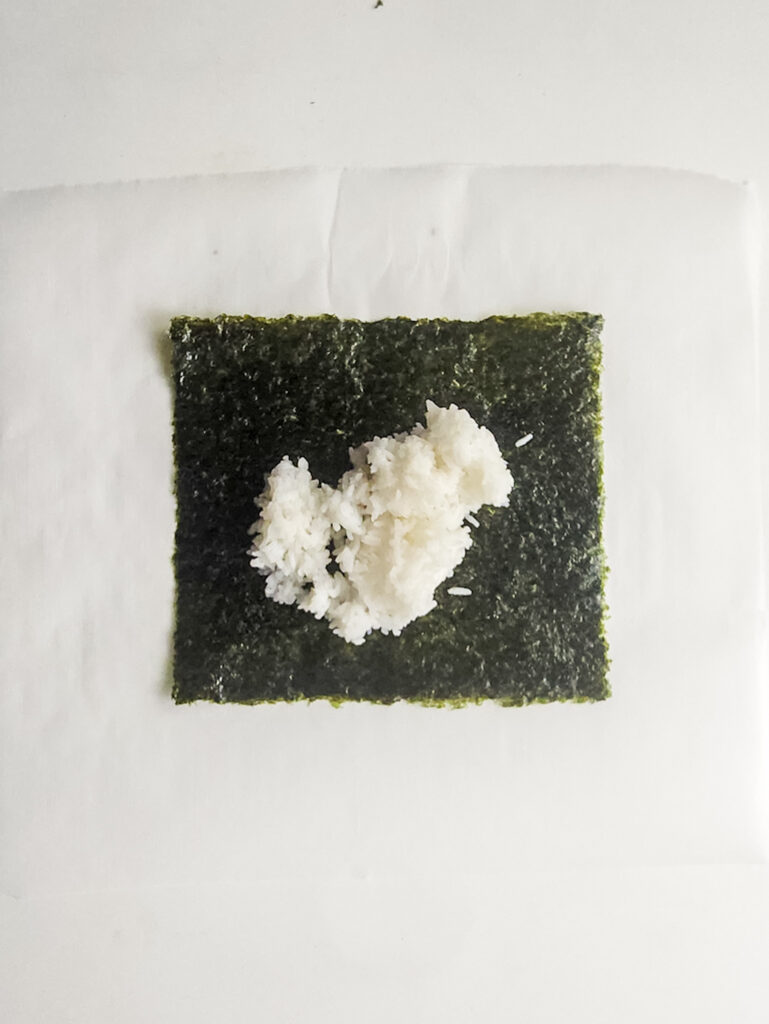
Prepare your rolling surface by placing a sheet of parchment paper. 4. Place a sheet of nori (seaweed) on the parchment paper, shiny side down. 5. Spread a thin layer of the seasoned rice evenly over the nori, leaving about 1 inch of space at the top for sealing.
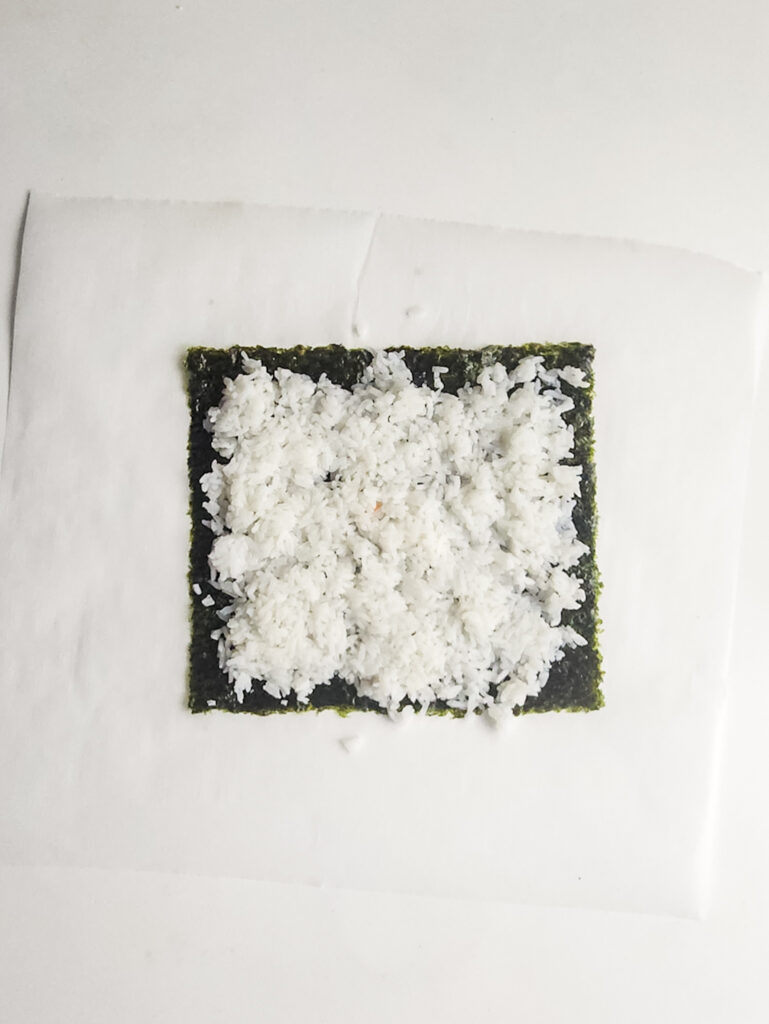
Arrange a few spinach leaves, a few shredded carrots, and a spoonful of the spicy tuna mixture horizontally across the center of the rice.
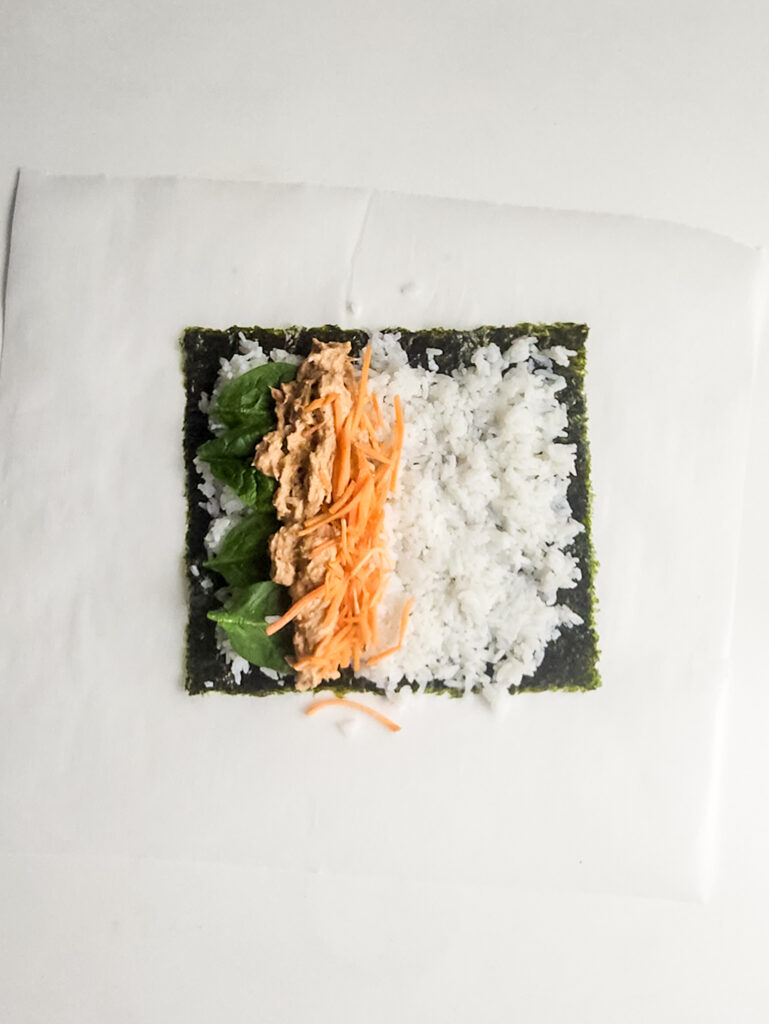
Carefully roll the kimbap tightly from the bottom, using the parchment paper to help keep it tight as you roll toward the top edge.
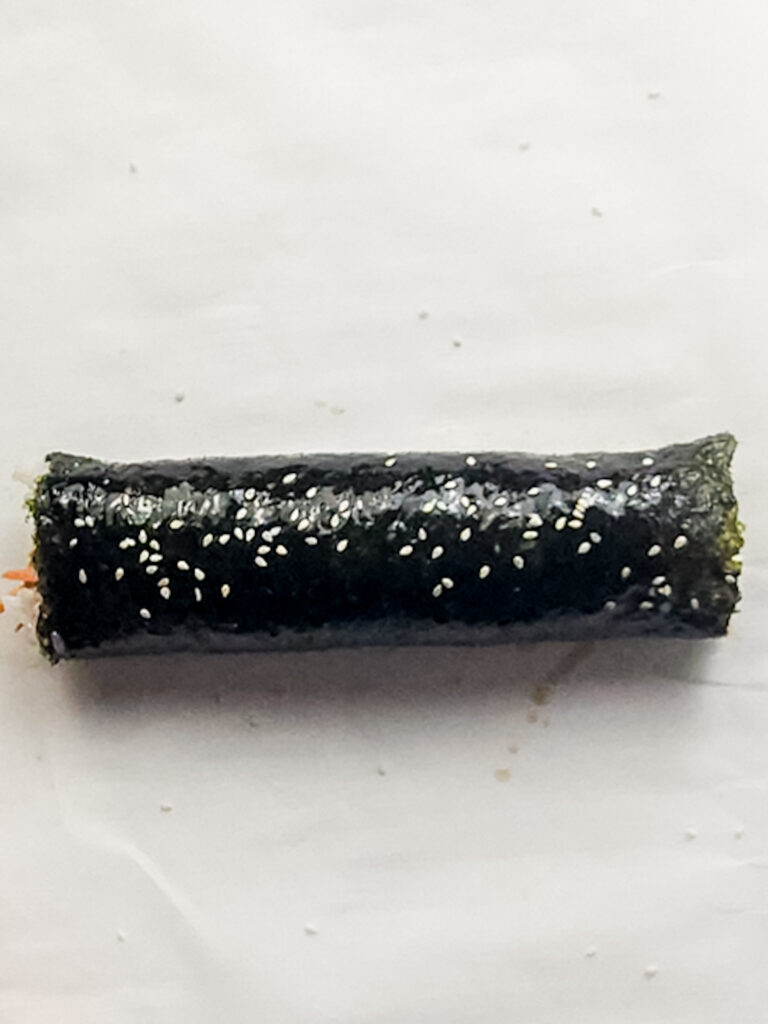
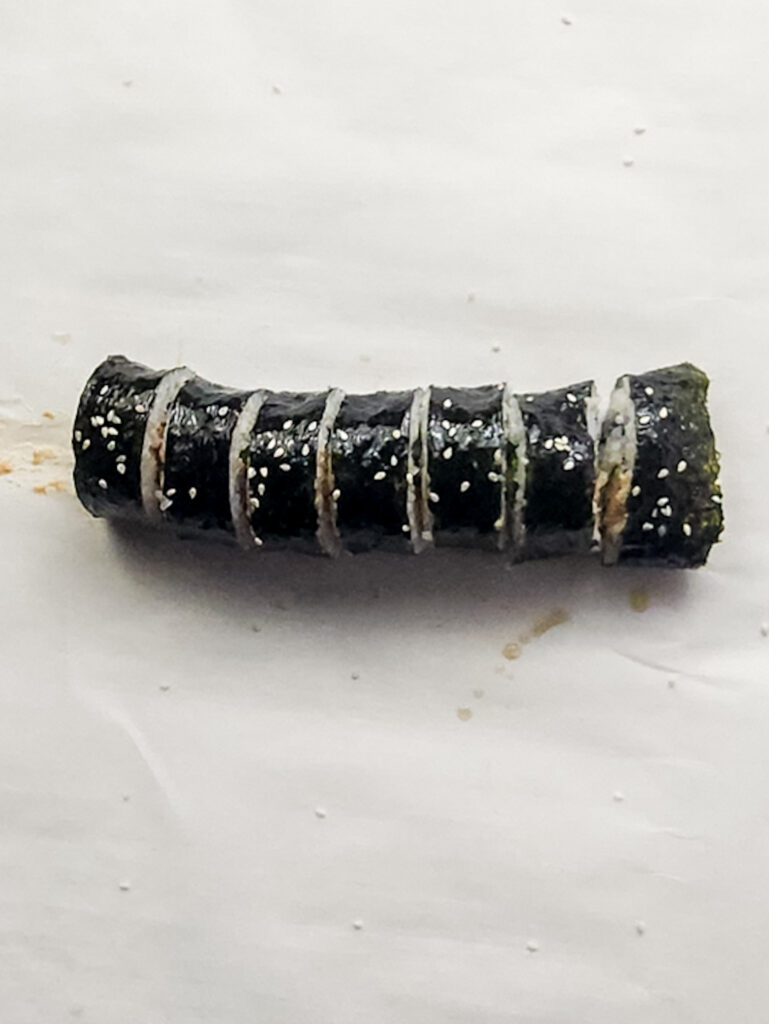
Once rolled, use a sharp knife to cut the roll into bite-sized pieces, wiping the knife clean between cuts for neat slices.
Brush each roll with a small amount of sesame oil and sprinkle with sesame seeds. Serve the spicy tuna kimbap immediately and enjoy!
Sushi vs Kimbap: What’s the Difference?
At first glance, sushi and kimbap can look almost identical. Both are rolled dishes made with rice, seaweed, and a variety of fillings, sliced into bite-sized pieces. But despite their similar appearance, they come from different cultures and have distinct flavors, ingredients, and traditions behind them.
Understanding the difference between sushi and kimbap can help you appreciate each dish for what it is and even decide which one suits your taste better.
What Is Sushi?
Sushi originates from Japan and is one of the most well-known dishes in Japanese cuisine. The defining feature of sushi is its rice, which is seasoned with a mixture of vinegar, sugar, and salt. This gives sushi its signature slightly tangy flavor.
There are many types of sushi, including nigiri (hand-pressed rice topped with fish), sashimi (sliced raw fish without rice), and maki (rolled sushi). While not all sushi contains raw fish, many popular varieties include ingredients like salmon, tuna, or shrimp.
Sushi is typically served with soy sauce, wasabi, and pickled ginger. These condiments enhance the flavor and add a balance of saltiness, heat, and freshness.
Overall, sushi has a light, clean taste that highlights the natural flavor of the ingredients.
What Is Kimbap?
Kimbap comes from South Korea and is a popular everyday food often enjoyed as a quick meal, picnic dish, or packed lunch.
Unlike sushi, the rice used in kimbap is seasoned with sesame oil and salt instead of vinegar. This gives it a richer, nuttier flavor. The rolls are also often brushed with sesame oil on the outside for extra taste and shine.
Kimbap usually contains fully cooked ingredients. Common fillings include seasoned beef, tuna mixed with mayonnaise, egg strips, pickled radish, carrots, and spinach. The combination of textures and flavors makes kimbap more hearty and filling.
It’s typically eaten on its own without dipping sauces, making it a convenient grab-and-go option.
Key Differences Between Sushi and Kimbap
While both dishes use rice and seaweed, the differences become clear when you look at how they are prepared and served.
- Rice seasoning: Sushi rice is vinegared, while kimbap rice is flavored with sesame oil and salt.
- Fillings: Sushi often includes raw fish, while kimbap mainly uses cooked ingredients.
- Flavor profile: Sushi tastes light and slightly tangy, while kimbap is more savory and nutty.
- Serving style: Sushi is paired with condiments like soy sauce and wasabi, whereas kimbap is usually eaten as is.
- Cultural role: Sushi is often seen as a restaurant dish or delicacy, while kimbap is a casual, everyday food in Korea.